Lidar
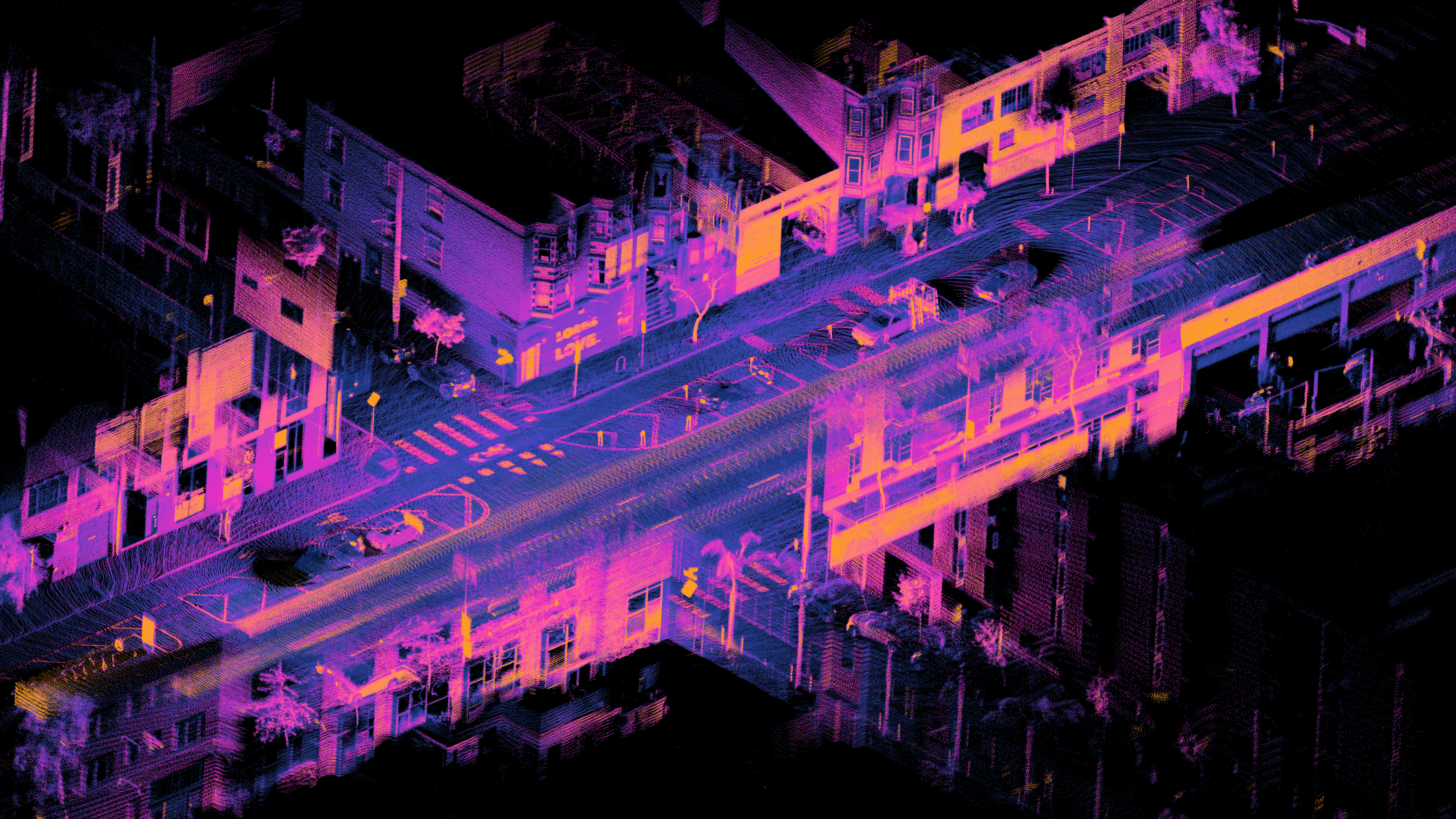
A lidar is a sensor that measures its surroundings by emitting light and detecting the return. Unlike cameras, which only capture bearing and intensity, lidar directly measures distance, giving autonomous vehicles and robots a precise 3D model of the world around them.
What lidar does
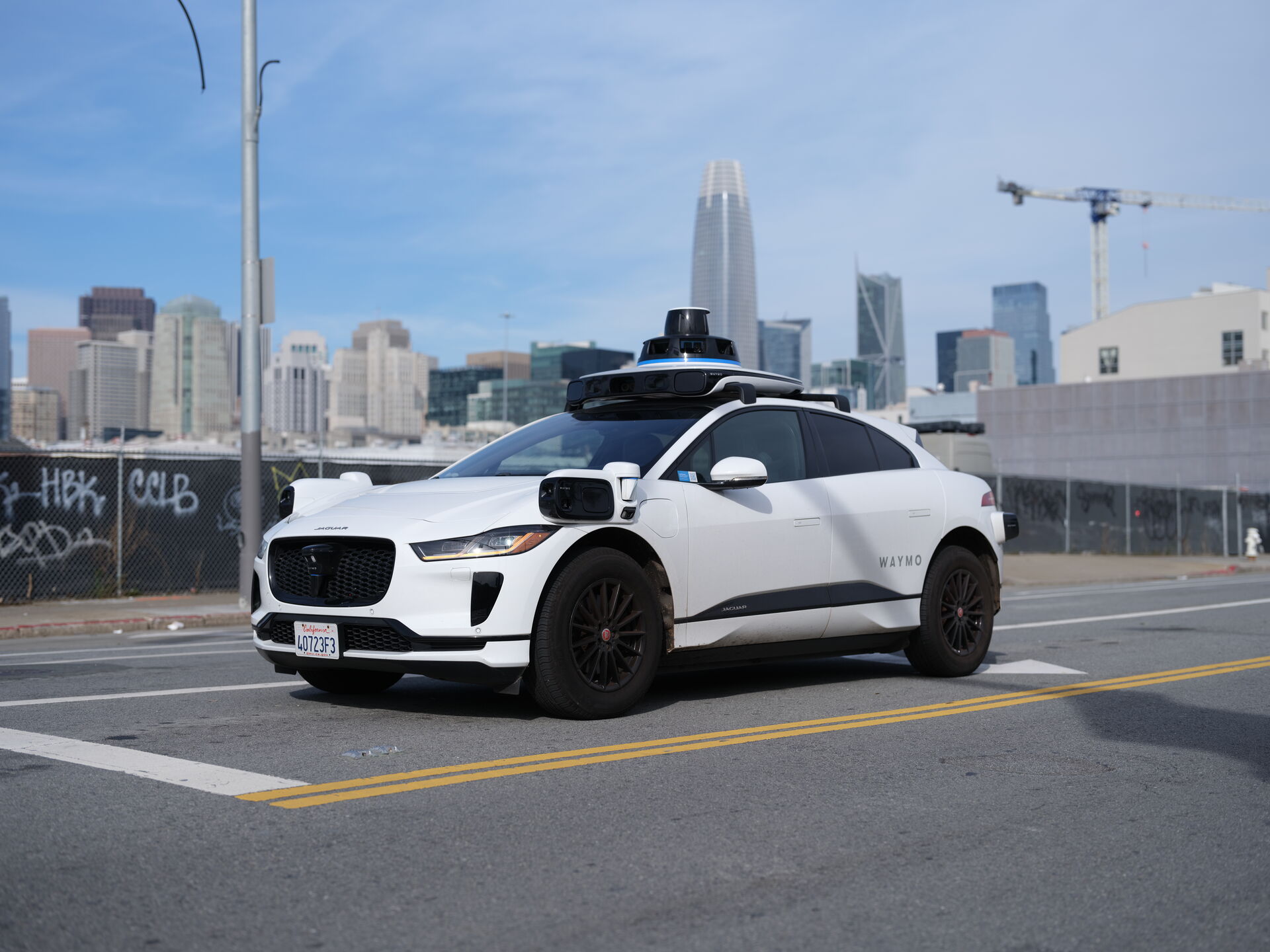
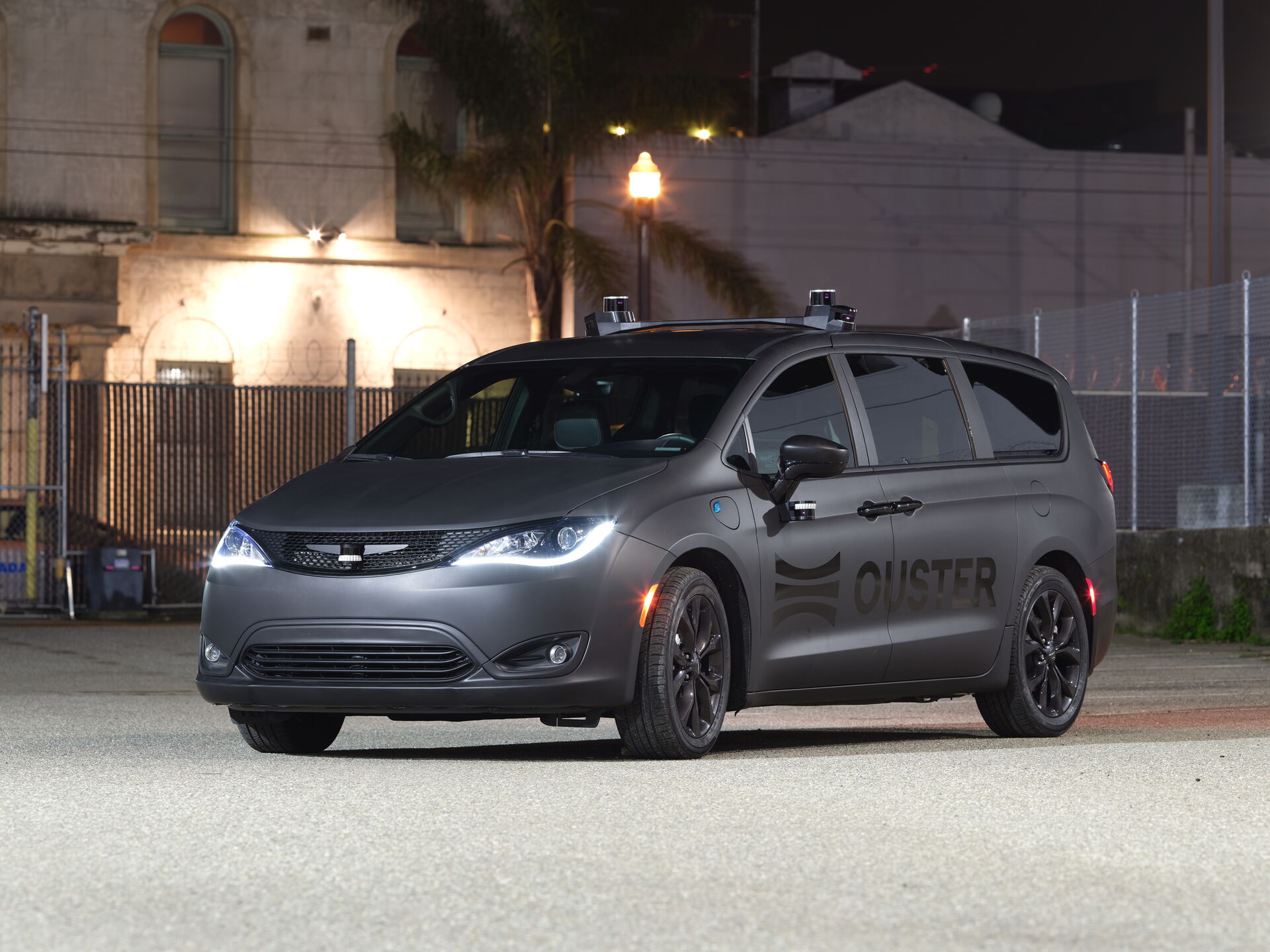
A lidar is a sensor which operates by bouncing light off surrounding surfaces. Lidars typically quantify:
- distance, by measuring how much time it takes for light to bounce back
- bearing, by shining the light or pointing the detector in a particular direction
- reflectivity, by measuring how much light has bounced back
- speed, by measuring the Doppler shift in the reflected light
- ambient, by measuring the amount of light in the environment in a particular direction
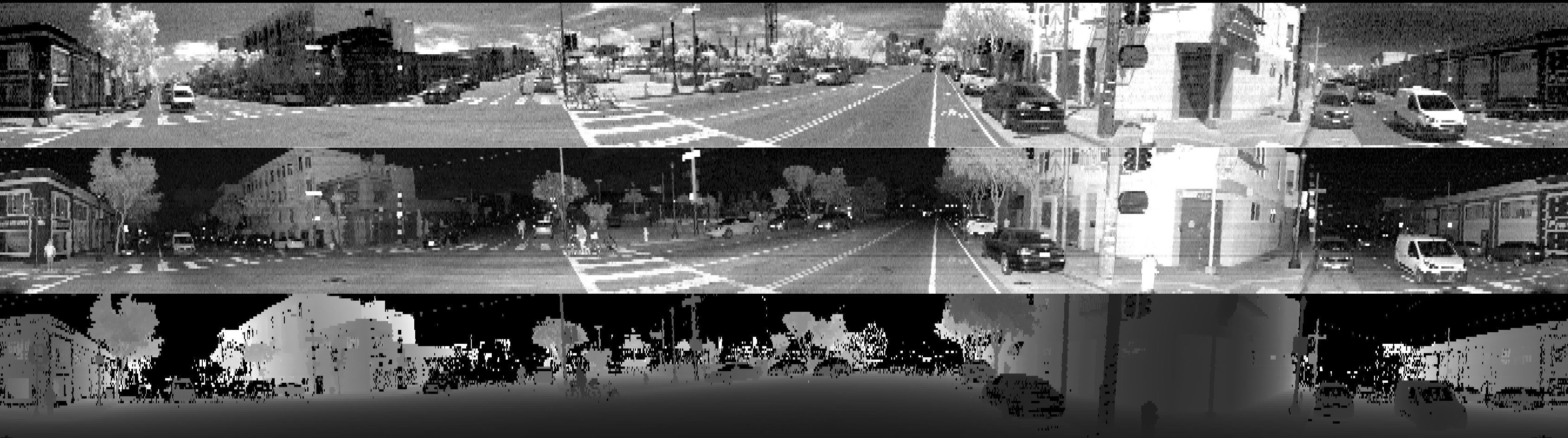
In general, we are most interested in distance and bearing. Surface reflectivity is also valuable, as it allows detection of road lines in the automotive case.
By measuring distance in many directions, an autonomous vehicle can perceive its environment. Each measurement corresponds to a discrete 3D point in space. Through a decade of steady research, engineers designed algorithms capable of leveraging this 3D point cloud to unlock spatial understanding. Obstacle avoidance and precise positioning are just two direct results of this technology.
Distance and bearing measurements can be converted into 3D Cartesian points. For example, given range r and bearing θ, φ, the 3D point is:
![p = [r sinθ cosφ, r sinθ sinφ, r cosθ]](/assets/images/docs/lidar/eq1.svg)
In contrast, a camera only measures bearing and ambient light intensity. Each pixel of a photo is a measurement of how much light there is in that particular direction. But generally, a camera has much higher bearing resolution than a lidar.